TL;DR
Karma is the principle that intentional action shapes future experience, taught in Hinduism, Buddhism, and Jainism as a law of cause and effect rather than reward or punishment. It is not fate, and it is not the universe keeping score against you. Understanding it can help you act with more care and less anxiety.
Title: What Is Karma, Really? A Clear Guide to the Law of Cause and Effect
Karma means action, and the consequences that action sets in motion. In the traditions where the idea started, it's a law of cause and effect: intentional deeds leave imprints that shape your future experience, in this life and, in some traditions, beyond it. It's not a scorekeeper, not luck, and not punishment handed down by a judge.
Most people use the word loosely, as in "that's karma" when someone gets what they deserve. The original teachings are both simpler and deeper than that. Here's what karma actually means, where the idea comes from, and how to work with it without slipping into fear or superstition.
What does the word karma actually mean?

The word comes from the Sanskrit karman, meaning "act" or "deed." At its root, karma is about action, specifically intentional action, and the results that follow from it.
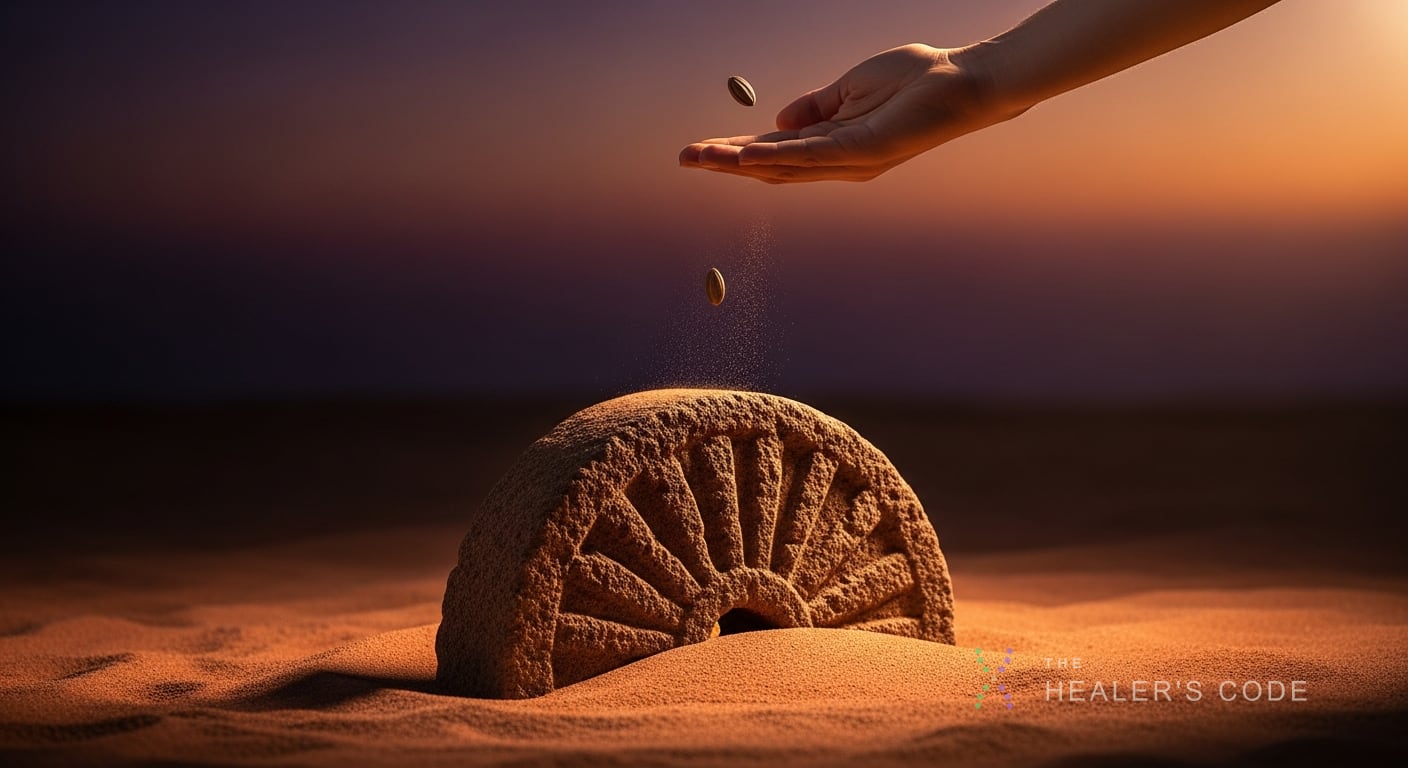
The core idea: what you do, driven by intention, produces effects. Kind, honest, grounded action tends toward one kind of outcome. Cruel, careless, or grasping action tends toward another. You're planting seeds, in a very real sense.
This isn't mystical bookkeeping. It's closer to a natural principle, like the way a habit forms. Repeat an action and it shapes who you become, and who you become shapes what happens next.
Where does the concept of karma come from?
Karma is a central teaching in several traditions that started in India, and each one understands it a little differently.
In Hinduism, karma is bound up with dharma, your duty and right action, and with samsara, the cycle of rebirth. Actions carry consequences across lifetimes, and the goal is eventually to be freed from that cycle.
In Buddhism, the emphasis is on intention. The Buddha taught that karma is cetana, volition or intent, meaning the will behind an act carries the weight, not just the act itself. An accident and a deliberate harm aren't treated the same karmically.
Across all three, karma isn't about a god rewarding or punishing you. It's a description of how action and consequence are woven together over time.
Is karma the same as fate?
No. This is a common mix-up, and it matters.
Fate says the outcome is fixed no matter what you do. Karma says the opposite: your present choices are constantly shaping what comes next. Karma isn't a sentence you're stuck serving. It's more like momentum you can redirect.
Traditions that teach karma also teach freedom. In Buddhism especially, the whole point is that you can change the pattern by changing your intentions and actions now. Past causes influence the present, but the present is where you have room to act.
So if you've ever felt that karma means "you're doomed to suffer for old mistakes," set that down. That's not the teaching. The teaching is that this moment is workable.
Want this read on your own numbers?
Your Blueprint turns these ideas into a personal map, calculated from your name and birth date.
Does karma mean bad things happen to bad people?
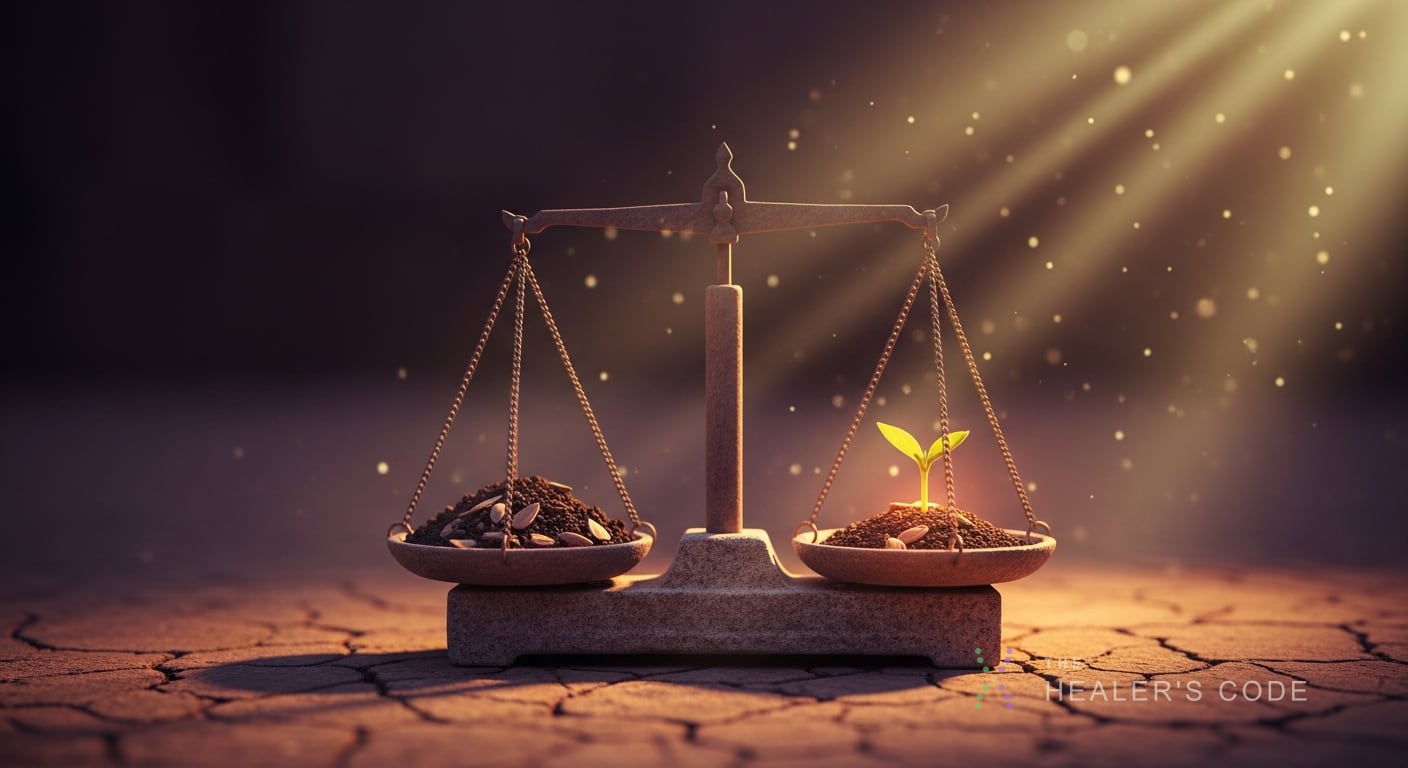
Not in the tidy, satisfying way the pop-culture version suggests. Karma isn't a cosmic referee tripping up people who wronged you.
Reducing karma to instant payback misses the point. The traditions describe karma unfolding over long stretches of time, often beyond what any one person can see. Waiting around for someone to "get theirs" turns a tool for self-reflection into a spectator sport.
It can also quietly harden you. Assuming everyone's suffering is deserved closes off compassion for people who are simply having a hard time. Many teachers who write on karma pair it with an emphasis on compassion for exactly this reason.
The more useful direction of karma points inward: what am I planting, right now, with this choice?
How can you work with karma in daily life?
You don't need to believe in rebirth to find karma useful. Treat it as a practical lens on cause and effect, and it becomes a quiet discipline.
Watch your intentions. Before you act, notice the impulse behind it. Are you moving from generosity, fear, resentment, or care? Intention is where karma begins.
Assume your actions reach further than you can see. A small kindness or a small cruelty ripples outward. You won't always witness the effect, but that doesn't mean there isn't one.
Stop looking for the scoreboard. Let go of the need to see people rewarded or punished on your timeline. That release is itself a lighter way to live.
Repair what you can. Karma isn't about guilt. When you cause harm, a constructive response is to make amends and change the pattern, rather than punish yourself. If you want support building a steadier practice around this kind of reflection, guided meditations can help you slow down enough to notice intention before you act.
How does karma connect to the soul and self-knowledge?
In the traditions where karma developed, it's tied to the soul's journey across lifetimes: the patterns you carry, work through, and eventually release. Whether or not you hold that literally, the idea points to something worth noticing. You arrive shaped by what came before, and you're always shaping what comes next.
Self-reflection tools can help you see those patterns more clearly. Numerology, in the Pythagorean tradition used here at The Healer's Code, is one such tool. Using your name and birth date, and honoring the Master Numbers 11, 22, 33, and 44, your chart can act as a mirror for tendencies you keep meeting, strengths you lean on, and lessons that seem to repeat. If you're curious how this maps to a broader system, the method explains how these tools fit together, and the community is a good place to talk through what you notice. It's meant for self-reflection and insight, not as medical, financial, legal, or psychological advice, and not as a guaranteed prediction of your future. For a related angle on timing and cycles, see what your personal year number means and how to calculate it.
If you want a structured starting point for that kind of reflection, you can get your Soul Blueprint and use it as a mirror for the patterns worth your attention.
Whatever framework you use, the invitation of karma stays the same: pay attention to what you set in motion, and act with a little more care.
Sources
Brian Wroblewski
Numerologist and Master Teacher
Brian Wroblewski is the founder of The Healer's Code. He reads charts with the Pythagorean system and teaches people how to understand the numbers they were born with.